
Here is the revised article.
Step 1: What Are Your Shipping Requirements?
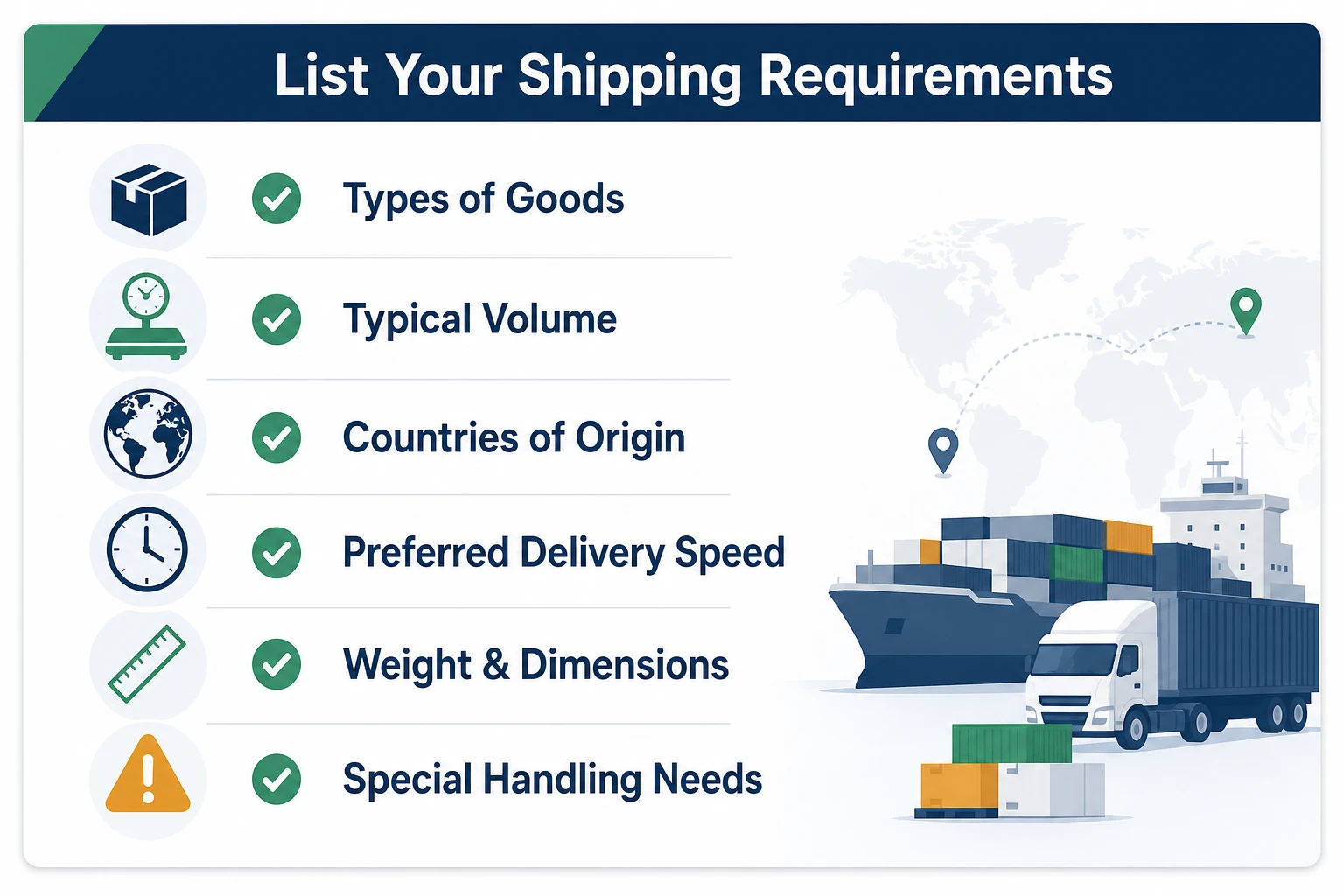
Your shipping requirements decide which freight forwarder Australia is best suited to your small business importing operation. Begin by listing the types of goods you import, their typical volume, the countries you ship from, and your preferred delivery speed. A small business importing artisan furniture from Italy needs different expertise than one importing bulk electronics from China. Document your average shipment weight, dimensions, and whether you need temperature control or hazardous goods handling. Knowing these details upfront prevents you from wasting time with forwarders who lack the right network or specialisations.
Step 2: How Do You Verify Credentials and a Forwarder’s Experience?
Check the forwarder’s licence and industry affiliations before you engage. A reputable freight forwarder in Australia holds a valid Australian International Freight Forwarder licence and is a member of organisations such as the Freight & Trade Alliance (FTA) or the Australian Federation of International Forwarders (AFIF). For small business importing, look for a forwarder that has at least three years of experience handling shipments similar to yours. Ask for references from two or three current clients who run small businesses. If the forwarder cannot provide them, consider that a red flag.
Step 3: What Services Should a Forwarder Offer for Small Importers?
A suitable freight forwarder must offer end‑to‑end services that cover the unique needs of a small business importing goods. At a minimum, the forwarder should provide:
- Ocean or air freight booking
- Customs clearance and documentation
- Warehousing or consolidation for less‑than‑container‑load (LCL) shipments
- Domestic ground transport to your door
Many small businesses benefit from consolidation services, which allow you to ship smaller volumes without paying for a full container. Ask the forwarder if they offer a consolidated shipping schedule for your main origin ports. If you import frequently, also check whether they provide a digital dashboard for tracking shipments and managing paperwork.
Step 4: How Do You Compare Quotes and Pricing?
Compare quotes from at least three freight forwarders using a standardised request. The cheapest rate is rarely the best value for small business importing. Create a simple comparison table that includes the base freight cost, surcharges (fuel, security, peak season), customs broker fees, and any port or terminal handling charges.
| Cost Component | Forwarder A | Forwarder B | Forwarder C |
|---|---|---|---|
| Base ocean freight (20’ container) | $1,200 | $1,050 | $1,300 |
| Bunker adjustment factor | $150 | $200 | $100 |
| Customs clearance fee | $180 | $150 | $200 |
| Port handling charges | $90 | $110 | $80 |
| Delivery to your warehouse (Sydney) | $250 | $200 | $300 |
| Total estimated cost | $1,870 | $1,710 | $1,980 |
This table lets you see which forwarder is truly cheaper when all extras are included. Demand a written quote that breaks down each line. If one forwarder’s quote is significantly lower, ask why – it may indicate they are cutting corners on insurance or service frequency.
Cheap Shipping Options and How to Identify Them
Finding cheap shipping options without sacrificing reliability requires a focused approach. In our experience vetting forwarders, we recommend looking for consolidation services that group small shipments from multiple importers into a single container. This is often the most affordable route for businesses shipping less than a full container load (LCL). Additionally, ask forwarders about economy sea freight services, which use slower transit times (typically 25–35 days from China to Australia) in exchange for lower rates. Be wary of quotes that seem too good to be true—they may exclude essential costs like customs clearance or port handling. A genuine cheap shipping option will still include a transparent breakdown of all fees, including the customs broker fee. For more detail on these costs, see our guide on Australian customs brokerage fees.
Step 5: How Do You Evaluate Customer Support and Communication?
Reliable customer support is a make‑or‑break factor for a small business importing goods. Test how each forwarder handles your questions before you sign a contract. Call them during business hours and note the time it takes to reach a human. Send a quick email about a hypothetical shipment and see whether they respond within 24 hours. Ask who will be your main point of contact – a dedicated account manager is ideal for a small importer who cannot afford to chase multiple people. Also confirm that they offer proactive tracking updates, ideally via email or a mobile app, so you always know where your cargo is.
Step 6: How Do You Make the Final Decision and Start Trial Shipments?
Make your final choice by ranking the three shortlisted forwarders against your priorities. For most small business importing, the key factors are total cost, transit time, service range, and communication responsiveness. Create a simple weighted scorecard. For example, if cost is 40% of your decision, transit time 30%, and support 30%, then assign a score out of 10 for each factor and multiply by the weight. The forwarder with the highest total is your pick.
"A trial shipment with a small, low‑risk order is the best way to confirm a forwarder’s reliability before committing to a long‑term contract."
Start with a trial shipment of less than $10,000 value. Monitor the booking process, tracking updates, on‑time delivery, and how the forwarder handles any customs issues. If the trial goes smoothly, you have found a trusted partner for your growing import business. If not, you can pivot to your second choice without major loss.
Top Freight Forwarders in Australia and Their Reviews
When selecting a freight forwarder Australia, it helps to know which companies are consistently rated highly by small importers. Based on our analysis, the top freight forwarders in Australia include Mainfreight, DHL Global Forwarding, and Kuehne+Nagel, each offering robust services for small to medium volumes. For parcel and mail forwarding services—ideal for e-commerce businesses shipping small items—companies like MyUS and Shipito are popular choices, providing US and UK addresses for consolidation and re-shipping to Australia. Freight forwarder reviews on platforms like ProductReview.com.au and Trustpilot reveal that small importers value forwarders who communicate clearly and handle customs delays promptly. We recommend reading at least five recent reviews for any shortlisted forwarder, paying special attention to comments about hidden fees and transit time reliability. For a deeper comparison of transit options, see our air freight vs sea freight guide.
Parcel and Mail Forwarding Services for Small Importers
For businesses that import smaller, high-value items, parcel and mail forwarding services offer a flexible alternative to traditional freight. These services allow you to ship goods to a local warehouse in the origin country, which then forwards them to your Australian address. This is particularly useful for purchasing from overseas retailers that do not ship directly to Australia. Some freight forwarders also offer these services as part of their portfolio, so it is worth asking when you request a quote. In our experience vetting forwarders, we recommend using a dedicated parcel forwarding service for shipments under 20 kg, as the per-kilogram rates are often more competitive than standard air freight. Always check for consolidated shipping options, which combine multiple small parcels into one larger shipment to reduce your total cost. This step-by-step approach ensures you choose a freight forwarder Australia that truly supports your small business importing journey.