
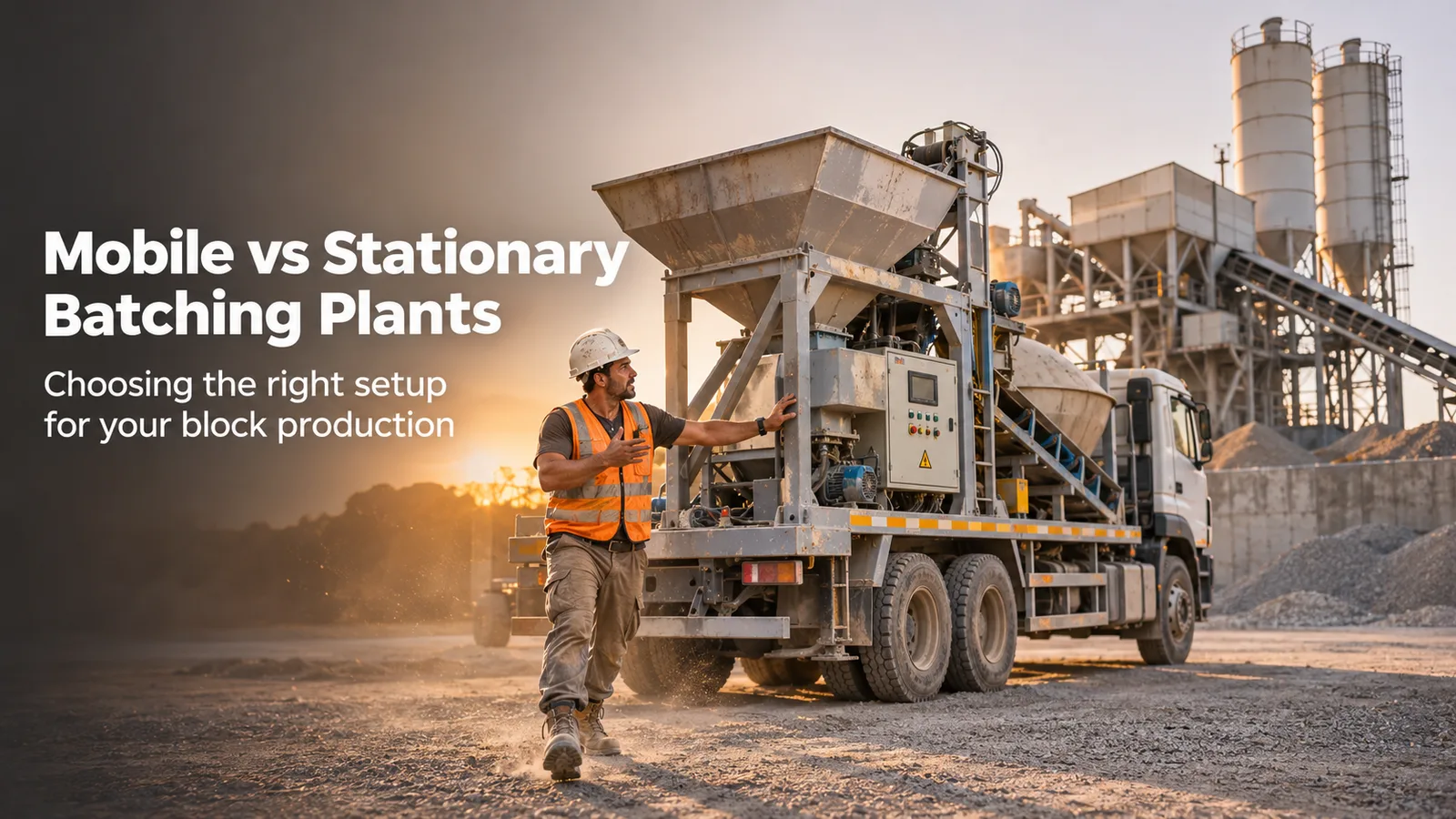
The Heart of Your Concrete Operation
A concrete batching plant is the central hub where raw materials like cement, aggregates, water, and admixtures are precisely measured and mixed to produce high-quality concrete. The choice between a mobile and stationary system is one of the most significant decisions a construction or block manufacturing business can make. Understanding the operational differences is the first step toward optimizing your production line.
A well-designed concrete batching plant can significantly improve construction efficiency by ensuring consistent mix quality and reducing waste. For businesses that rely on a steady supply of concrete for products like paving stones or hollow blocks, this consistency is non-negotiable. The batching plant essentially dictates the pace and quality of your entire operation, from raw material intake to the final cured product.
The Strengths of a Stationary Concrete Batching Plant
Stationary plants are the workhorses of large-scale production. They are designed for high volume, precision, and long-term operation. These plants are typically installed at a permanent location and feature robust silos for bulk material storage, advanced automation systems, and high-capacity mixers.
The primary benefit of a stationary concrete batching plant is its ability to deliver a vast quantity of uniform concrete day after day. This makes it the ideal choice for large infrastructure projects, ready-mix concrete suppliers, and major block manufacturing facilities. The upfront investment is higher, but the total cost of ownership can be lower over a multi-year project due to economies of scale and lower per-yard production costs.
Automation is a key advantage of stationary plants. Advanced PLC controls ensure every batch meets exact specifications, which is critical for producing high-strength structural blocks. The enclosed nature of the plant also protects materials from weather, ensuring consistent quality regardless of the season. For a block manufacturer, this translates directly to fewer rejects and a more reliable product line. Furthermore, the ability to store large quantities of cement and aggregates on site insulates production from supply chain disruptions.
The Flexibility of a Mobile Concrete Batching Plant
Mobile concrete batching plants offer a completely different value proposition. They are mounted on a chassis or trailer, allowing them to be transported between job sites. This mobility makes them perfect for contractors who work on multiple projects, remote construction sites, or large linear projects like highways and pipelines.
A mobile concrete batching plant can be set up quickly and begin production in a short amount of time. The lower initial capital expenditure makes it accessible for smaller to mid-sized businesses. While the production capacity is generally lower than a stationary plant, the flexibility and reduced logistics costs can make it a more profitable choice for dynamic work environments. For block makers operating in different regions, a mobile plant allows for on-site production, drastically cutting down transport costs for raw materials and finished goods.
Mobile plants also offer a faster return on investment for short-term projects. They can be moved from a completed project to a new site without the significant decommissioning and reinstallation costs associated with a stationary plant. This makes them an excellent entry point for businesses looking to expand their production capabilities without committing to a single permanent location. The compact design of many mobile plants also means they require a smaller footprint, making them suitable for congested urban job sites or temporary staging areas.
Key Factors in Your Decision
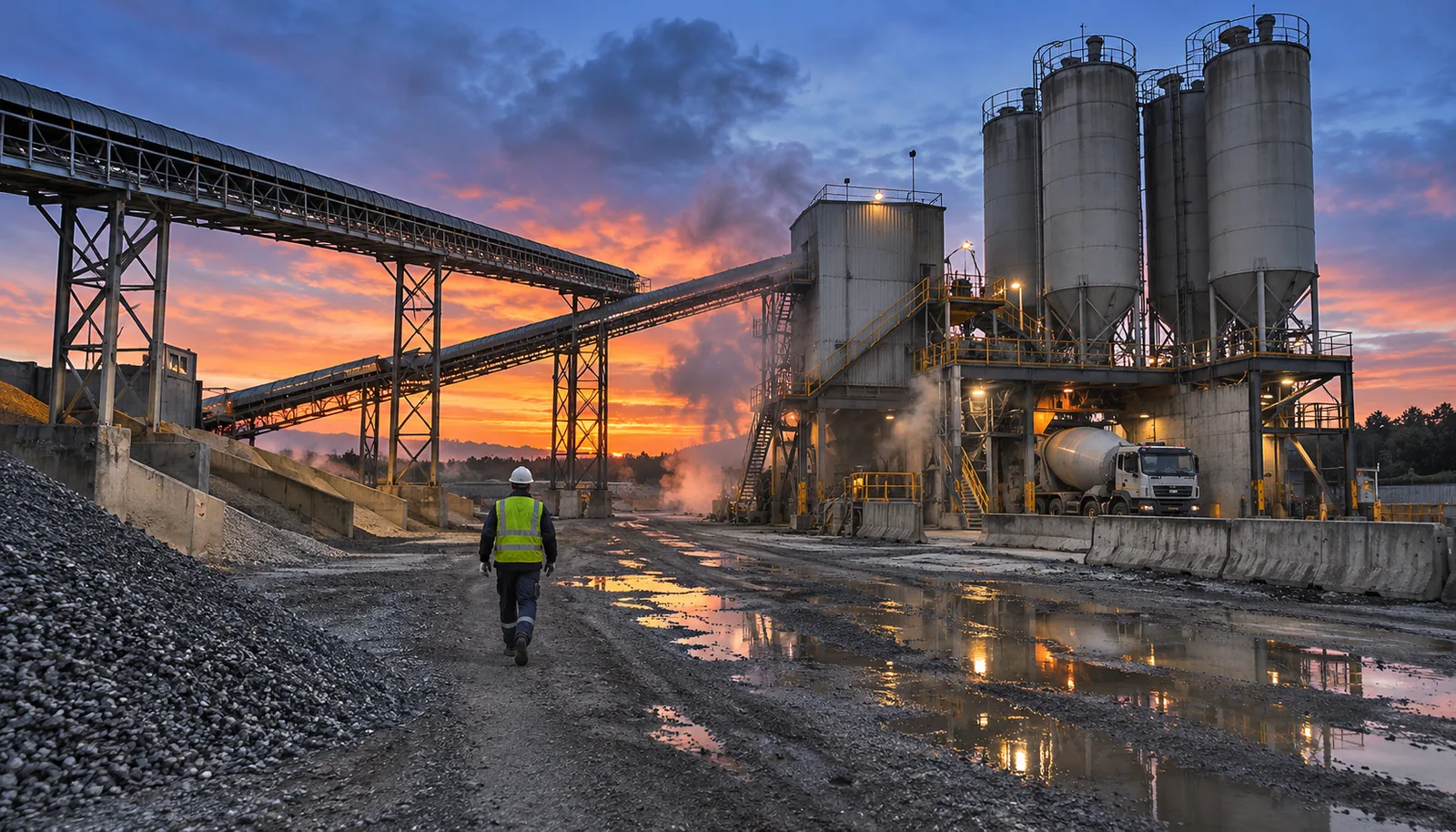
Choosing between mobile and stationary comes down to your specific operational needs. The right choice balances your production targets with your budget and project timeline.
The right concrete batching plant is not just an expense; it is the foundation of your production quality.
- Project Duration and Scale: Long-term, high-volume projects favor stationary plants. Short-term or multiple scattered projects favor mobile setups.
- Raw Material Logistics: Access to bulk cement and aggregates makes stationary plants more efficient. Mobile plants are better when materials must be sourced locally at each site.
- Investment and ROI: Mobile plants have a lower barrier to entry and can begin generating revenue quickly. Stationary plants require a larger initial investment but offer lower per-unit costs over time.
- Labor and Automation: Stationary plants can operate with a small, highly skilled team thanks to full automation. Mobile plants may require more hands-on operation and supervision, which can impact labor costs on remote sites.
Evaluating these factors in the context of your current contracts and future pipeline will guide you toward the most profitable solution.
Making the Choice for Your Block Production
For businesses specifically in the block making industry, the decision is closely tied to your growth strategy. If you are establishing a central production hub to serve a wide region, a stationary plant offers the capacity and automation needed to run multiple block machines simultaneously.
The homogeneity of the concrete mix directly impacts the structural integrity and surface finish of concrete blocks. A consistent supply from a well-maintained batching plant eliminates variability, ensuring every block meets your quality standards. Lontto specializes in concrete block machines, mobile block making machines, and compressed earth block machines, making the choice between mobile and stationary batching a critical part of your production strategy.
- Email: [email protected]
- Phone: 708 260 8300
Whether you operate a mobile block making machine for smaller job sites or a high-capacity stationary line, integrating a reliable batching plant ensures the raw material consistency your blocks demand. The right investment today will streamline your operations and improve your final product quality for years to come. Partnering with a manufacturer who understands both the batching and block-making sides of the equation can help you design a seamless workflow from raw material to finished product.